Motocross Adventure Mountain Trails Mountain Trails Overview
Read the terrain, plan the line, and explore without constant tip-overs.
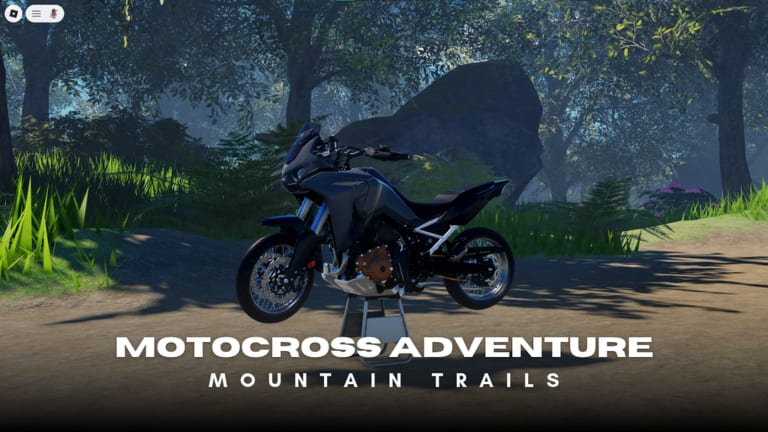
Motocross Adventure: Mountain Trails is built around exploration on challenging mountain dirt. The official pitch highlights steep climbs, extreme dirt paths, and off-road riding that tests skill and balance with realistic-but-fun controls. This guide maps the trail types you will meet, how to explore safely, how to plan routes, and how to use landmarks so you are not lost after every crash. It links tightly to Hill Climbs, Balance Tips, and the Tier List when you start ranking routes or bikes by difficulty.
You do not need a perfect named atlas on day one. You need a way to classify terrain, pick lines that match your current skill, and abort before a bad decision becomes a long recovery walk.
Trail types you will see
Steep climbs
Steep faces and pitched ramps are the signature challenge. They demand low gears, progressive throttle, and early aborts when traction dies. Approach with speed you can still modulate—not a panic pin from the bottom every time. Scout the face for steps, loose patches, and false summits. Dedicated technique lives on Hill Climbs.
Dirt singletrack
Narrow dirt ribbons wind between rocks, trees, or ridgelines. Singletrack rewards smooth steering and looking ahead. Brake before tight bends while upright. Keep a gear that lets you accelerate out without bogging. Oncoming riders on busy servers (up to about twenty players) mean you should leave space and avoid stopping blind on crest corners.
Open exploration benches and hillsides
Wider hillsides and plateaus are where you learn. Use them to practice throttle discipline, recover from tip-overs, and connect landmarks. Open ground is also where you reassess after a failed climb: roll to flat, remount, pick a better line, and try again. Treat these areas as your classroom between harder objectives.
Mixed technical sections
Many mountain routes chain a climb into a narrow bench into another climb. The mistake is riding the whole chain with one gear and one throttle style. Shift and reset your plan at each terrain change. If a mixed section keeps dumping you, break it into pieces and master each piece alone.
How to explore safely
Ride within your recovery budget. If a tip-over here would dump you off a ledge into a long fall, choose a lower-risk parallel line. Adventure is the genre; reckless lines are optional.
Keep speed appropriate to visibility. Crests and switchbacks hide other players and sudden drops. Enter blind rises slower than your ego wants.
Abort early on failing climbs. When the front washes, the rear spins without progress, or balance collapses past a small correction, turn out or roll back if the trail allows. Fighting a dead climb mid-face often tips you into a worse restart angle. Details in Hill Climbs.
Watch server traffic. Popular sessions mean shared trails. Do not park on the only climb line. If someone is mid-attempt, wait or take a side path.
Warm up before summit hunting. A short flat loop and one mild grade—outlined in Getting Started—saves time you would waste on tip-overs with cold inputs.
Route planning habits
- Pick a goal landmark (a ridge notch, a distinctive rock, a spawn-visible peak) before you leave flat ground.
- Classify the first segment as climb, singletrack, or open. Match gear and throttle to that class before you roll.
- Identify an escape — a turnout, a lower bench, or a reverse path — so aborting is a plan, not a panic.
- Stage the ride. Clear segment A cleanly three times before chaining A+B. Progression beats one lucky clear followed by ten crashes.
- Note failure causes. Wrong gear, too much throttle, late brake, or balance neglect each point to a different drill on Controls or Balance Tips.
When you compare which routes feel beginner-friendly versus expert, record notes and cross-check the Tier List so your ranking language stays consistent with the rest of the wiki.
Landmarks and navigation
Mountains look similar when you are upside down in a ditch. Build a personal landmark list:
- Spawn or bike area silhouette
- A wide practice bench you can always find
- The base of your current project climb
- A safe descent path that returns to spawn without new hazards
After each crash, ask: can I see two landmarks? If not, prioritize getting to open ground and reorienting before another hero attempt. Exploration games reward players who can reacquire the map mentally; Motocross Adventure is no different.
If a patch reshapes trails or adds routes, skim Updates and rebuild your landmark list instead of assuming old lines still exist.
Line selection basics
Straighten what you can. On climbs, a slightly longer smoother line often beats a short vertical wall. On singletrack, early apexes that keep the bike upright help balance.
Avoid shiny-looking traps. Sudden steep steps, off-camber shelves, and blind drop-offs punish late decisions. If you cannot see the landing or the next bike length of trail, slow down.
Use momentum as a tool, not a blunt weapon. Carry enough speed to keep the bike stable, not so much that you cannot shift or brake. Momentum tips are covered alongside weight control in Balance Tips.
Respect the grade change. The moment dirt kicks up, downshift and soften throttle. The moment it flattens, upshift and breathe. Terrain class changes are your cue.
Suggested exploration loop for intermediate sessions
- Spawn → open bench warm-up (two minutes).
- Mild singletrack out-and-back focusing on brake-before-turn.
- One project climb with a defined abort point (see Hill Climbs).
- Return via a known safe descent.
- Optional second climb only if recoveries still feel calm.
Track that loop with the Practice Checklist so each session has a warm-up, a skill focus, and a cool-down instead of random crashing.
Linking skill pages to terrain
- Confused by inputs on a new trail type → Controls
- Tip-overs on mild grades → Balance Tips
- Stuck on a specific steep face → Hill Climbs
- Still learning the game flow → Getting Started
- Ranking difficulty or bikes → Tier List
Mountain trails in this experience are the content. Treat them like a skill tree: open exploration unlocks singletrack confidence, which unlocks controlled steep climbs. Skip steps and the mountain will send you back to the bench anyway—usually sideways.
Frequently Asked Questions
Quick answers for Motocross Adventure: Mountain Trails riders.
What kinds of trails does the game focus on?
Mountain adventure riding with steep climbs, dirt singletrack, and open exploration hillsides. The design emphasizes skill, balance, and off-road feel rather than a flat city cruise.
How do I explore without getting constantly lost after crashes?
Pick landmarks before you leave spawn, stage routes in segments, and return to open benches to reorient after tip-overs instead of immediately retrying blind.
When should I attempt the steepest climbs?
After warm-up loops and mild grades feel controlled. Use Hill Climbs for gear, momentum, and abort rules before committing to the hardest faces.
Are busy servers dangerous on narrow trails?
They can be. Leave space on shared climb lines, avoid stopping blind on crests, and choose side paths when another rider is mid-attempt.